
Step 3: Choose Your Cage
Lee A Jones
2/5/20264 min read
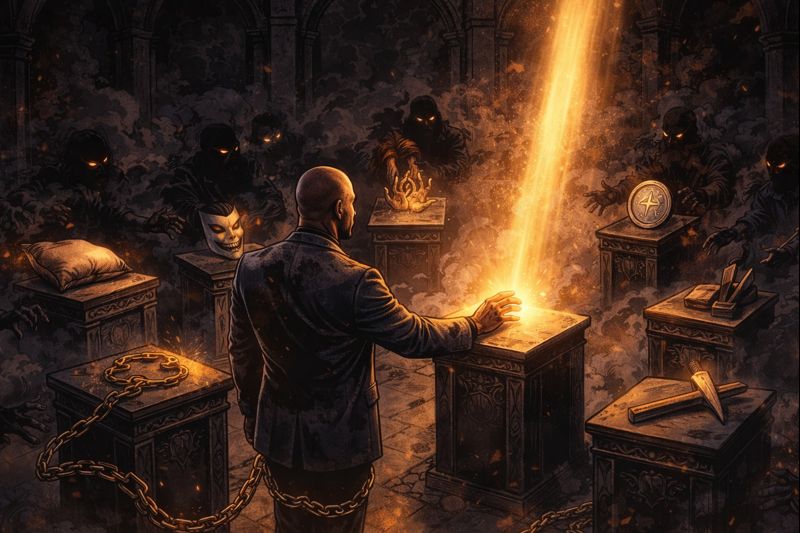
Many people say they want freedom. Freedom from stress. Freedom from pressure. Freedom from expectations. Freedom from the grind. But here’s the controversial truth: what many of us call “freedom” is just comfort with better branding. And comfort is one of the most dangerous mindsets on the planet. Because comfort doesn’t announce itself as a problem. It shows up as reason. It sounds like maturity. It looks like patience. It feels like “protecting your peace.” Meanwhile, it slowly steals your accomplishments and convinces you that you’re being responsible while you’re actually drifting.
If you’re asking yourself, “Why do I keep ending up back at the same place?” this is one of the most honest answers you’re going to get: you’re serving something you didn’t choose.
The mindset nobody talks about: you’re always loyal to something
There is no such thing as a neutral life. Every day you serve a master. Not in a dramatic way. In a quiet, daily way.
You serve comfort when you avoid discomfort.
You serve approval when you say yes to what you don’t respect.
You serve ego when you need to be right more than you need to be better.
You serve fear when you keep your world small to stay safe.
You serve distraction when you can’t sit with your own thoughts.
You serve discipline when you do what needs to be done without a mood.
You serve purpose when you do what matters even when it costs you.
You serve peace when you refuse chaos even if chaos is familiar.
Your mindset is not just “how you think.” It’s who you obey when pressure hits.
That’s why this is a major problem. If you don’t know what you serve, you will default to the easiest loyalty available. And the easiest loyalty is almost always comfort.
Why “freedom” becomes a trap
People chase freedom because they think it will feel good. But when freedom has no structure, it becomes a vacuum. And vacuums get filled.
They get filled with whatever is loudest: anxiety, cravings, distraction, old habits, other people’s demands, short-term relief. That’s why people can have a weekend with “no responsibilities” and still feel worse by Sunday night. The mind doesn’t relax in a vacuum. It hunts for stimulation, certainty, or escape.
This is where your goals quietly die.
Not because you didn’t want them badly enough, but because your mindset was still loyal to ease. You wanted progress without friction. You wanted change without risk. You wanted a new life without a new standard.
A specific example: the “blank calendar” illusion
Let’s make it real.
Imagine someone who’s been saying for years that they want to write a book, start a business, or change careers. They finally get a rare gift: a blank Saturday. No meetings. No obligations. No one asking for anything. This is the day they’ve been waiting for.
The morning starts with good intentions. Coffee. A plan. Maybe even a notebook open on the table.
Then the mind starts bargaining.
“I should clean up first.”
“I need to research a bit more.”
“I’ll start after lunch.”
“Let me just check a few things.”
“I deserve to relax—I work hard.”
By noon, nothing meaningful has happened, but the person is busy. By evening, the day is gone. The goal is untouched. And the story becomes: “I didn’t have time.”
That story is a lie. The truth is harder: the person served comfort. They served the version of themselves that avoids the risk of doing real work and possibly finding out they aren’t as ready as they hoped.
That’s what makes this mindset sabotage so vicious. You can be exhausted and still have done nothing that moves your life forward. You can be busy and still be drifting.
The question isn’t, “Did I have time?”
The question is, “What did I serve when I had it?”
The real reason this matters: your loyalty shapes your identity
If you keep serving comfort, your identity becomes fragile. You start needing things to feel a certain way in order to function. You become dependent on motivation. You become dependent on perfect conditions. You become dependent on a mood.
That’s the hidden reason so many people struggle: not because they lack willpower, but because their mindset has been trained to obey whatever feels safest in the moment.
And then, when pressure hits, they don’t rise to their goals. They fall to their default loyalty.
This is why Step 3 matters in the series. If you never choose your loyalty on purpose, you will keep waking up inside a life built by accident.
The question you're are secretly asking—and the answer
Here’s the real question behind all the productivity hacks and motivational videos:
“What’s wrong with me?”
Nothing is “wrong” with you. You’re not broken. You’re trained.
You’ve been trained—by stress, by past experiences, by reward loops, by fear of failure, by fear of being seen—to prioritize short-term relief over long-term growth. Your mindset isn’t evil. It’s protective.
But protection becomes sabotage when it starts costing you your future.
So the better question is:
“What am I serving that I didn’t choose?”
When you answer that honestly, you gain something powerful: the ability to stop calling your drift “normal.”
The uncomfortable conclusion
If your current loyalty is comfort, you will always have a reason to delay. If your current loyalty is approval, you will always be owned by other people’s expectations. If your current loyalty is ego, you will keep defending who you are instead of becoming who you could be.
And if you don’t catch this now, your life will keep repeating—not because you’re incapable, but because your mindset is loyal to the wrong master.
That’s the fear you should have: not that you’ll fail once, but that you’ll keep living the same year on repeat and call it “life.”
What this series is doing for you
This six-post series exists because mindset is not inspiration. It’s structure. It’s loyalty. It’s standard.
You’ve already seen how the inner narrator rewrites your reality. You’ve already seen how payoffs keep your patterns alive. Now you’re seeing the deeper layer: the reason change feels hard is because change threatens what you’ve been serving.
The next post is where it gets practical in the most uncomfortable way: we’re going to talk about how to interrupt the old script on purpose—without waiting for the perfect day, the perfect mood, or the perfect moment.
If you’re still reading, you’re already closer to “There” than you think. But don’t mistake understanding for change. The mind can understand anything and still stay the same.
The only thing that proves a mindset shift is what you serve when it costs you.
© 2026. Lee A Jones. All rights reserved.
LEE A JONES
From Here to There
Podcast host, Author, Veteran. Helping people move through transition, build resilience, and live with more purpose.
LET'S CONNECT
Have a question or want Lee on your podcast or stage?
QUICK LINKS
RESOURCES
PODCAST
Recommended Read
Newsletter
Mindset & Resilience